
Quick answer
Key points
- Start with a health check and share any history you have.
- Vaccines and parasite prevention depend on age, exposure and previous doses.
- Use visits to review growth, nutrition, teeth, behaviour and microchip details.
- Ask for the next dates and individual plan before leaving the clinic.
The first days: establish a health baseline
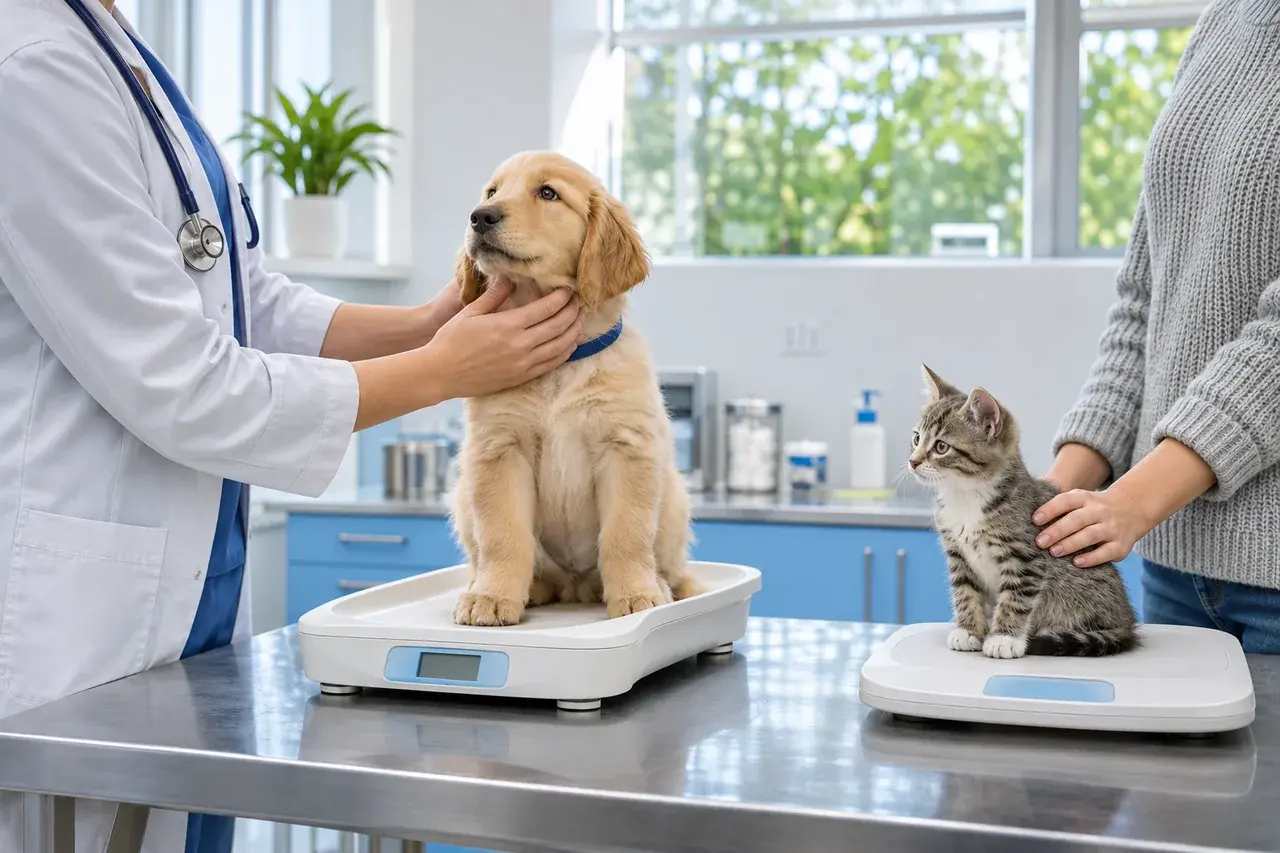
The first appointment helps assess your pet, clarify their history and design a realistic schedule. Bring records, previous treatments and information about diet and home. The vet may check growth, body condition, teeth, ears, skin and stool, and explain which tests or preventive care suit this individual.
Vaccines and parasite prevention: a plan, not a generic recipe
Recommended vaccines depend on species, age, previous doses, health, household, travel and contact with other animals. Young puppies and kittens often need several appointments in the early months, but timing and vaccine choices should be checked against their records and current guidance. Parasite prevention also depends on lifestyle and local risks. Never use a product without checking that it is safe for the species, age and weight.
Our dog and cat vaccination guide can help you prepare questions, but confirm the schedule with your vet.
Safe socialisation and learning
Socialisation means gradual, positive experiences with people, sounds, surfaces and routines—and other animals when appropriate. It does not mean indiscriminate exposure to parks or unfamiliar pets. Ask your vet how to balance learning with infection risk while preventive care is underway. Use play, rewards and rest; do not force interactions.
Food, growth, teeth and identification
Track weight and mention changes in appetite, stools, movement or behaviour. Food portions should suit growth and body condition rather than a generic chart alone. Ask how to build positive habits for handling, brushing and oral care, and confirm the microchip and contact details. For kittens, play, hiding places, scratching surfaces and separated resources can help create a predictable home.
Around 6–12 months: review the plan and next stage
Maturity varies by species, breed and size. At follow-up visits, review vaccines, parasite prevention, oral health, behaviour, food and when to discuss neutering. Ask before switching to adult food. Keep the next dates written down: follow-up depends on an individual schedule, not one birthday for every pet.
Just adopted and need the short version?
Start with the related guide to preparing your home and planning the first visit after adoption. The two pages work together: the starter guide helps with today, while this roadmap supports planning through the rest of the first year.
Frequently asked questions
Clear answers before you decide.
Which vaccines does a puppy or kitten need in the first year?
It depends on species, age, history, health and exposure. Bring the vaccination record and ask the clinic for an individual schedule; a generic online calendar cannot replace that review.
How often should a young pet be dewormed?
There is no single frequency for every pet. Age, weight, environment, travel and product all matter. Confirm the plan with a vet and do not combine products on your own.
Veterinary sources consulted
Educational information based on professional guidance. It does not replace an examination or individual veterinary advice.